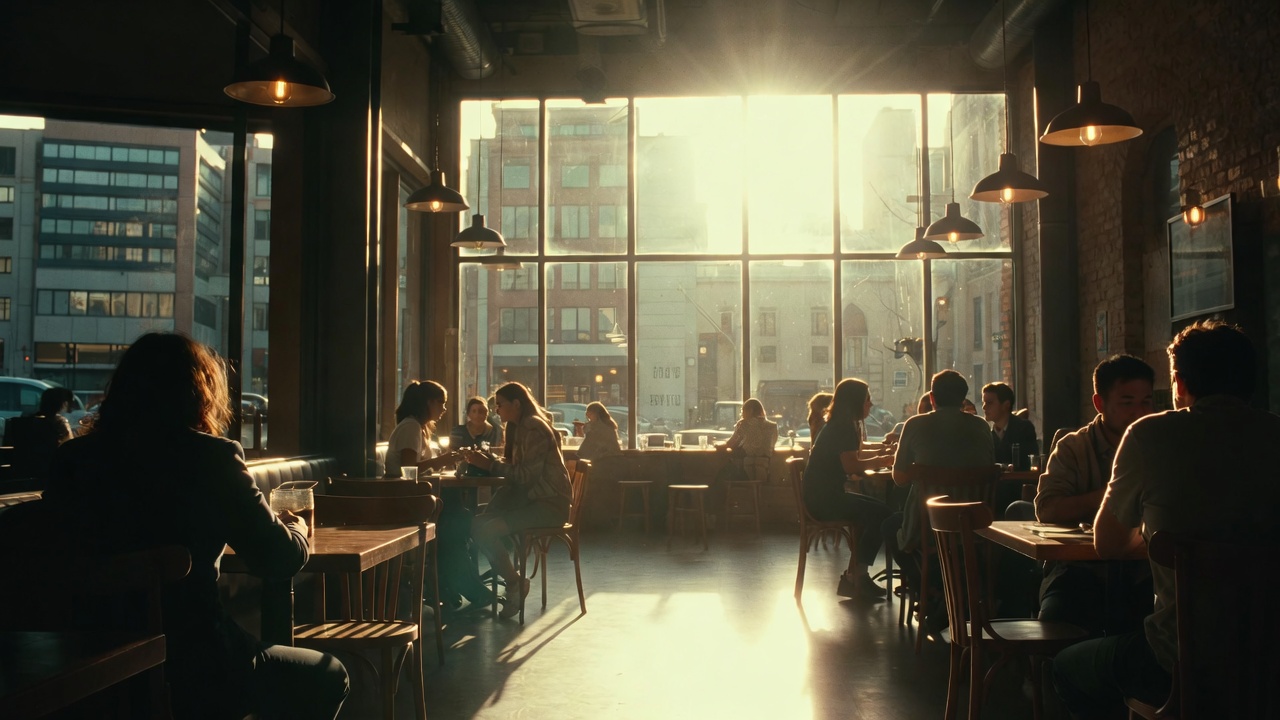
Some places ask nothing of you.
You walk in, sit down, breathe — and that’s enough. No introductions, no performances, no need to explain where you came from or what you’re chasing.
That’s the quiet charm of neighborhood spaces: they exist outside the rules of achievement.
A corner bench, a small café, a dim tavern at the end of the block — all these are places that forgive noise, pace, and exhaustion.
They pull you in without demanding to know your story. And that, in this age, feels almost revolutionary.
Sometimes, the world feels like it’s constantly asking for your proof of worth — your title, your updates, your goals. But the real relief comes from these simple spaces that never ask for credentials. Just a place where you can take off your mask for a while, where silence doesn’t need to be filled, and where being alone doesn’t mean being invisible.
The Freedom of Just Being There
Cities thrive on movement. Everyone’s going somewhere, doing something, proving a point.
But in between that rhythm, there’s a counter-beat — small spaces that hold stillness.
They don’t measure productivity, they don’t broadcast success. They just let people exist.
You could be reading, waiting, scrolling, or simply watching the light move across the wall — and somehow, it feels okay.
It’s not about escape. It’s about permission.
To be unguarded. To be ordinary. To breathe without feeling like you owe anyone a reason.
And that’s what public spaces — from a small tavern to a neighborhood café — still get right. They’re like the lungs of the city, giving people space to exhale. Not a break from life, but a pause that makes life bearable again.
Where People Pause, Not Perform
There’s a kind of honesty that happens when no one is watching closely.
Local taverns, park benches, laundromats — these places allow pauses that modern life doesn’t schedule.
Here, strangers can sit near each other without conversation, yet still feel connected.
It’s not intimacy, but it’s recognition: we all need space to stop pretending.
You don’t have to earn your right to sit. You don’t have to post about it.
You just are, and that’s the simplest form of belonging.
These moments feel small but carry quiet meaning.
They teach us that community isn’t built by constant engagement, but by shared presence — the kind that doesn’t shout, doesn’t brand itself, and doesn’t need validation.
The Quiet Pull of Familiar Places
Every neighborhood has a few corners like this — half-forgotten, yet full of life.
The regulars know the pattern of footsteps, the sound of doors, the comfort of being unnoticed.
It’s easy to underestimate that kind of pull.
But for people who live surrounded by noise, that small invitation — come, sit, no expectations — is a powerful kind of gravity.
In a city that keeps score, these are the rare places where the scoreboard disappears.
They remind us that real value isn’t in being seen, but in being accepted quietly, without performance.
Comfort That Doesn’t Need a Label
We talk a lot about “mental health” and “self-care,” but sometimes, the cure is simpler than the concept.
Just finding a seat that doesn’t judge you is enough.
The city doesn’t have to become quieter; you just need a corner that lets your thoughts slow down.
In that stillness, you realize how human connection doesn’t always need conversation — sometimes, it’s the silent agreement that everyone deserves space.
It’s in these places we find the kind of calm that can’t be bought or measured — the kind that reminds you you’re still part of something, even when you’re doing nothing at all.
When Presence Becomes a Form of Care
Urban life often celebrates noise, ambition, and growth.
But maybe care starts smaller — with presence. With knowing that your absence would be noticed, even if only by the person pouring coffee or cleaning the counter.
That’s what community looks like when stripped of design and agenda:
recognition without demand.
It’s easy, it’s unspoken, and it’s real — the easy pull that keeps us grounded in the neighborhoods we call home.
And maybe that’s the most human kind of connection left — one that doesn’t need to prove its worth, only to exist.
